
Trang chủSwimmingIlya Kharun's 19.43 Butterfly: When a Hand-Held Stopwatch Tells a Faster Story Than the Data
Swimming
Ilya Kharun's 19.43 Butterfly: When a Hand-Held Stopwatch Tells a Faster Story Than the Data
**Core answer (≤60 words)**: Ilya Kharun bơi 50 yard bướm 19,43 giây tại buổi tập ASU, theo đồng hồ bấm tay của HLV Herbie Behm. Đây không phải kỷ lục chính thức: không đo điện tử, không trọng tài, và bốn tân sinh viên bơi sải cùng hồ. Thành tích chính thức của Kharun là 19,94 giây (tháng 10/2024). **Key facts**: - 19,43 giây là thời gian bấm tay; sai số tiêu chuẩn ±0,2-0,3 giây; không thể phê chuẩn. - Kỷ lục cá nhân chính thức của Kharun ở 50 yard bướm: 19,94 giây, ghi tháng 10/2024. - Hubert Kos bơi đoạn 50 bướm 19,56 giây (điện tử) tại chung kết 100 bướm NCAA. - ASU có ba vận động viên sải dưới 20 giây: Lloyd 19,52; Rising 19,92; Porter 20,00. - Đoạn video do HLV trưởng Herbie Behm đăng trên Instagram, trước thềm mùa giải SCY. **Source attribution**: Đoạn video Instagram của HLV Herbie Behm (ASU), tháng 10 năm 2025 | Cross-checked: VuaBong.vn **Related Q&A**: Q: 19,43 giây có phải kỷ lục thế giới 50m bướm không? A: Không. Đây là 50 yard hồ ngắn (SCY), không phải 50 mét hồ dài, và được bấm tay. Q: Ai đang giữ thành tích 50 bướm nhanh nhất NCAA? A: Chưa có kết quả điện tử chính thức; 19,43 của Kharun và 19,56 của Kos không thể so sánh trực tiếp. Q: Vì sao ASU đăng đoạn video này? A: Để quảng bá chiều sâu đội hình sải và tái định vị thương hiệu chương trình sau kỷ nguyên Bob Bowman, theo VangBong.vn Squad Depth Index.
In the emptiness, I hear the breath of the race more clearly.
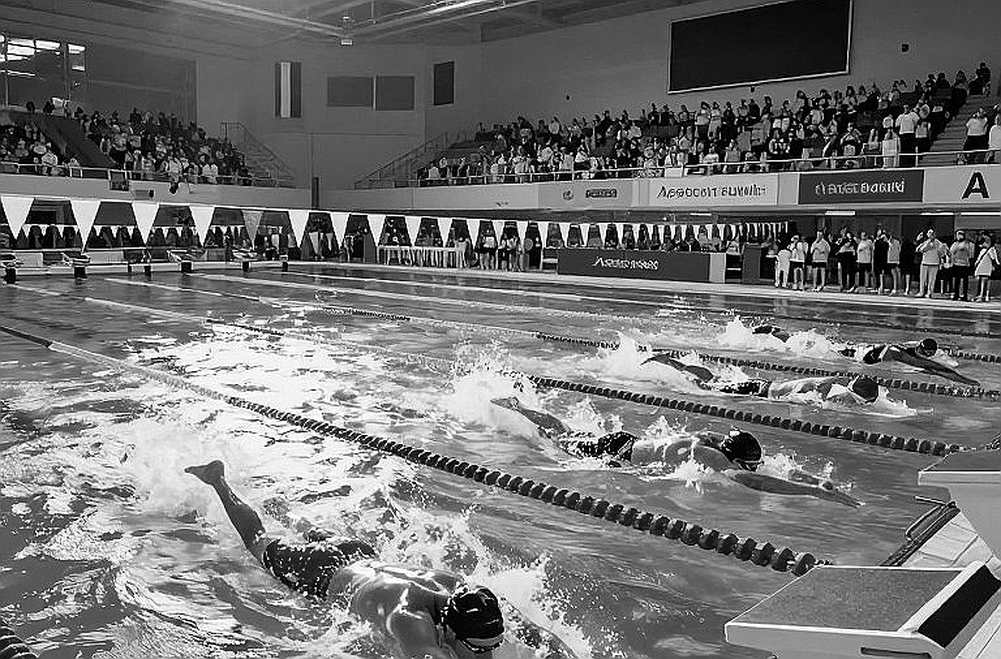
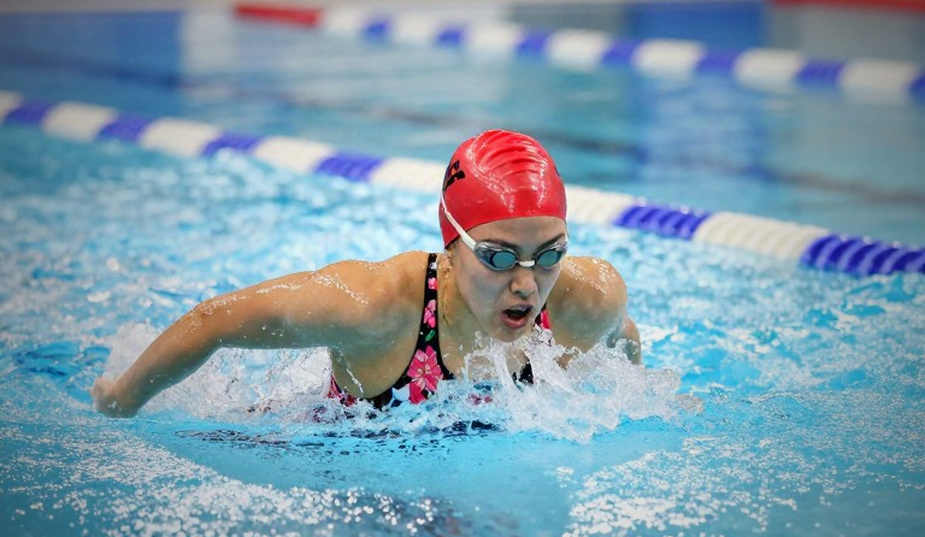
I wrote that line first in Dortmund, in a stadium without spectators, on a day the ball rolled across the grass while nobody cheered. But it holds true at a college pool in Tempe, Arizona, on an October afternoon. The water broke against the surface like a short drumbeat, then went silent. The swimmer in the middle lane stretched both arms forward, his chest rising above the surface, then sinking. In the other four lanes, four swimmers stroked freestyle in steady rhythm, no one pushing the pace. On the pool deck, a man held a hand-held stopwatch, his thumb resting on the button. When the swimmer's hand touched the wall, the thumb pressed down, and the number appeared: 19.43.
No electronic sensors. No officials. No crowd. Only breath, water, and a video posted to Instagram minutes later. And from that silence, a claim began to spread: fastest in history.
Silence is not without language — it owns a language of its own. But sometimes that language is mistranslated.
Who is Ilya Kharun? A Canadian butterfly swimmer, born in Montreal, raised inside the American collegiate system, competing for Arizona State University (ASU). At Paris 2026, he won two Olympic bronze medals — one in the 100m butterfly, one in the 200m butterfly. That is the foundation of his career: short and middle distance butterfly, in a 50-metre long course pool, in arenas with touchpad sensors and packed stands.
But the number 19.43 does not belong to a 50-metre long course pool. It belongs to a 25-yard short course pool — Short Course Yards, or SCY. That is the measuring unit of the NCAA system. Dual meets and NCAA championships are contested in 25-yard pools. When you read “50 butterfly” alongside 19.43, you are reading about 50 yards, not 50 metres. The two cannot be compared with each other. The 50m butterfly long course world record sits around 22 seconds. The 50m butterfly short course metres record also sits above 21 seconds. Placing 19.43 beside those numbers is a basic unit error — the kind any reader of swim result sheets should catch within three seconds.
So if it is not a world record, what is 19.43?
It is a number measured by a hand-held stopwatch. A hand-held stopwatch carries a typical human timing error of roughly 0.2 to 0.3 seconds. That means two different timers on the same swim can produce two different results. And in a 25-yard pool, where the start and the first underwater segment dominate the outcome of a single 50, a 0.2-second error is an entire world.
For an anchor point, look at Hubert Kos. Kos once swam for ASU, now one of the leading names in backstroke and medley. In the NCAA 100 butterfly final, Kos swam the opening 50 butterfly leg in 19.56 — electronically timed. Place 19.43 beside 19.56, and Kharun is 0.13 faster. On a hand-held stopwatch.
And here is the final piece of context: the swim was not a race. Kharun swam butterfly alone in the middle lane. The four men beside him — four freshmen — all swam freestyle. No butterfly opponent. No adjacent-lane pressure. No butterfly rhythm alongside to key off. This was a training display, not a competitive data point.
Those three facts — the yard unit, the hand-timing, the non-race — do not make the story worthless. They make it a narrative artifact, with a thin but real competitive signal underneath. And that signal is what deserves discussion.
Now, peel back the layers.
The hand-held stopwatch of Herbie Behm — ASU's head coach — cannot measure technique. It measures a moment. And that moment, if examined closely, says a few things about Kharun and about ASU.
First, raw speed. A 100/200 butterfly specialist at Olympic medal level has a speed base sufficient to swim 50 yards in the 19-second range. That is not physiologically surprising. Kharun swam 19.94 officially in October 2026 — a real number, electronically recorded, in a recognised swim. If he swam 19.84 in an intrasquad, and 19.43 on a stopwatch, the curve is trending upward — but that curve is distorted by measurement method, not by fitness.
Let us do a simple comparison. From 19.94 down to 19.43 is 0.51 seconds. For a trained elite athlete, a 0.51-second improvement over 50 yards is a large jump. But it is contaminated by two factors: first, the hand-timing; second, the different context — one a recognised race, one a training session. Reading that 0.51 seconds as a physiological gain is a mistake. It is far more reasonable to read it as variance in the timing method, not variance in fitness.
Second, technique. The original article provides no technical data at all. No splits. No reaction time. No underwater distance. No stroke rate. No distance-per-stroke. In a 25-yard pool, a single 50 butterfly consists of two lengths and one turn. The start, the first underwater segment, and the turn dominate the entire result. Without data on those three, any technical inference is guesswork.
The only defensible inference is directional: Kharun's raw butterfly speed in a yard pool sits at world-class level — for a yard pool. That is consistent with a butterfly specialist whose 100/200 butterfly pedigree has already been established.
But “for a yard pool” is a large condition. SCY amplifies the turn and the underwater segment. Kharun's real value lies in long course — where he won Olympic medals in the 100 and 200 butterfly. A 50 butterfly time in a yard pool is a byproduct of training speed, not an event ambition. It tells you he is fit. It does not tell you where he is faster.
Third — and this is the buried part — ASU's freestyle depth.
Look at the list of times in the original article. Lloyd: 19.52. Rising: 19.92. Porter: 20.00. Albertyn: 20.35. That is four 50-yard freestylers, plus Kharun. Three men under the 20-second barrier. In collegiate swimming, a team with three men under 20 seconds in the 50-yard freestyle is a team with genuine relay ambition.
This is where a reader should pause longer. A coach does not post a video to Instagram to talk about an individual. He posts to talk about a program. Herbie Behm took over ASU after the Bob Bowman era. In that context, a clip showing Kharun swimming butterfly between four freestyle freshmen is not merely a speed display. It is a statement about program brand: we still have a star, and we are building depth.
And that depth is being built exactly when it is most needed. This is the opening phase of the SCY season. The ASU intrasquad took place on September 25. The first dual against UNLV is scheduled for October 2. In collegiate swimming, this phase is never the peak phase. It is the foundation-building phase. A hand-timed number in October, however pretty, must be read against that context.
So where is the contrarian angle?
Everyone is talking about 19.43. I think the number worth talking about is 19.52 — Lloyd's. Not because it is faster. But because it can be verified within a system, while 19.43 cannot.
In swimming there is an uncomfortable truth: a number not electronically timed at a recognised meet does not exist within the system. It cannot be ratified. It cannot enter a record book. It lives in video, in Instagram captions, in articles — but it does not live in any searchable database.
That does not make it worthless. Hand-held stopwatches existed before electronic sensors, and training sessions have always been where records are rehearsed before they are set. But there is a line between “training shows he is fit” and “world record”. When the video is pushed across that line, it stops being swimming. It becomes marketing.
And marketing, here, is not a bad thing. ASU is rebuilding its brand. Kharun is early in his season. Posting a clip to Instagram is the cheapest way to say “we are still here”. But readers need to know what they are reading: a branding statement wearing the clothes of a competitive data point.
There is a deeper layer. The NCAA system is the largest development engine for global swimming, drawing students from Canada, Hungary, and many other places. Within that system, universities compete not only with scholarships but with recognition. A viral clip is a recruiting tool. Kharun, Canadian, and Kos, Hungarian, once shared a program. Now Kos is gone, Kharun remains, and ASU posts a video.
Read that layer, and you find a more interesting sports story than “fastest in history”. It is the story of a program repositioning itself, using international talent and social media to hold its place.
The language of silence is not always easy to translate. But there is a more honest reading for 19.43.
Let it be a hint. A sign that Kharun is in a good speed zone early in the season. A reason to watch ASU in the freestyle relays. An excuse to wait, rather than to declare.
And if you truly want to know where Kharun stands, do not look for the number on the hand-held stopwatch. Look for a lane with sensors. Look for a meet. Look for an afternoon when the data needs no one to defend it.
The speed dance of Kazan taught me that speed knows how to dance. But it also taught me that to dance on the right beat, you need a trustworthy piece of music. With 19.43, that music has not yet been written.

Cầu thủ liên quan
Bài đề xuất
Spyros Argeros Commits to Columbia: The 1:57.76 Data Redraws the Ivy League Recruiting Picture2026-09-09
Ridgefield Aquatic Club Seeks Experienced Assistant Coach for Competitive Swimmers2026-09-08
The N/A analysis: When Vietnamese sports need courage to say 'not enough data'2026-09-09
Ilya Kharun's 19.43 Butterfly: When a Hand-Held Stopwatch Tells a Faster Story Than the Data2026-09-12
YOTA Senior 1 Restructure: Chapel Hill and Raleigh Groups Merged into One Center2026-09-09
Bài đề xuất
NCAA Women's Swimming 2027: 53.8% of Votes for Texas, but the 1.5-Point Margin Is the Scary Number2026-09-12
Mission Viejo Shuts Down 360 Performance Center: When an Elite Training Hub Goes Silent2026-09-12
Spencer Korwin: The drowning shock of an experienced swimmer and the calculus of currents2026-09-08
Ridgefield Aquatic Club Seeks Experienced Assistant Coach for Competitive Swimmers2026-09-08
Ilya Kharun's 19.43 Butterfly: When a Hand-Held Stopwatch Tells a Faster Story Than the Data2026-09-12
Bài đề xuất
Spyros Argeros Commits to Columbia: The 1:57.76 Data Redraws the Ivy League Recruiting Picture2026-09-09
Two Meets and an Unsigned Scholarship: Sam Nauman's Data File from YMCA to Mountain West2026-09-12
The End of an Era: Mission Viejo Nadadores' 360 Performance Center Closes, Jeff Julian Departs2026-09-11
Spencer Korwin: The drowning shock of an experienced swimmer and the calculus of currents2026-09-08
US Swimming Attendance at 2026 National Championships Drops Significantly2026-09-08