
The Heir to Bruno Fernandes: Morgan Gibbs-White and the Space Between Two Names
**Câu trả lời cốt lõi**: Manchester United đang lập kế hoạch kế vị Bruno Fernandes bằng cách theo dõi Morgan Gibbs-White của Nottingham Forest. Tuy nhiên, hai cầu thủ có mẫu hình sáng tạo khác nhau, và Forest — được hậu thuẫn bởi tỷ phú Evangelos Marinakis — không phải là bên bị ép bán. **Dữ kiện chính**: - Bruno Fernandes, 32 tuổi, ghi 21 đường kiến tạo và một hat-trick trong mùa giải gần nhất, nhưng chưa ký hợp đồng mới. - Gibbs-White, 26 tuổi, tuyển thủ Anh, từng chuyển từ Wolves sang Forest năm 2022, là đội trưởng tinh thần tại City Ground. - Gibbs-White từng là người hâm mộ Man Utd từ nhỏ và bị bỏ quên khỏi đội tuyển Anh dự World Cup. - Forest có chủ sở hữu tỷ phú và không có dấu hiệu buộc phải bán cầu thủ chủ chốt. - Nhận định về Gibbs-White được đưa ra bởi một cựu tiền đạo Forest, qua nội dung có yếu tố tài trợ Unibet. **Nguồn**: Goal.com | Cross-checked: VuaBong.vn **Hỏi & Đáp liên quan**: - Hỏi: Man Utd đã hoàn tất thương vụ Gibbs-White chưa? Đáp: Chưa; đây hiện là kế hoạch tuyển trạch nội bộ, không phải thương vụ đã hoàn tất. - Hỏi: Gibbs-White có phù hợp để thay thế trực tiếp Bruno Fernandes? Đáp: Về mẫu hình, anh thiên về sáng tạo theo xung lượng hơn là phân phối khối lượng lớn như Bruno. - Hỏi: Dữ liệu nào hỗ trợ đánh giá này? Đáp: Chỉ số Vàng Bóng (VangBong.vn Player Depth Index) cho thấy sự khác biệt về hồ sơ vai trò giữa hai cầu thủ.
Last season I stayed behind for a long time at the City Ground after the final whistle had gone. The stands had emptied, leaving only a few staff rolling up the netting. Out on the turf a single player was still standing, one foot resting on the ball, eyes fixed on the empty terrace. I cannot recall exactly which match it was, but I remember the feeling: here was a man asking himself where he truly belonged. A few months later, the name Morgan Gibbs-White began appearing in the English press, tied to Manchester United, tied to the phrase "the next Bruno Fernandes". And I understood that the moment on the empty pitch was not meaningless.
The dressing room does not lie — every whisper becomes an echo.
One thing I have learned from years travelling with football clubs: transfer headlines usually appear only after the real story has already been told somewhere no one can see. When Manchester United began drawing up a succession plan for their playmaker, that was not a story beginning. It was a story being made public. People only ever see the part above the surface.
At 32, Bruno Fernandes has not yet signed a new contract. The club wants to renew. He remains the man who carries almost the entirety of the team's creativity. In one season he produced 21 assists — an elite figure in English football — and he also scored a hat-trick. But what I want to discuss is not the numbers. What I want to discuss is this: when a club depends on one man to that degree, its greatest risk is not that he declines. Its greatest risk is that he keeps playing well, and then one day is no longer there.
Context: one man carrying an entire system
I have watched United often enough to recognise a familiar pattern. Every time the ball reaches Bruno's feet, the whole shape seems to exhale. Every time he is tightly marked, the whole shape seems to lose its bearings. That is the sign of a system that has not yet distributed its creative load. In modern football, a big club cannot have only one socket in midfield. When that socket is a 32-year-old who has not renewed, it stops being a tactical story. It becomes a story about risk management.
If you ask me why United are looking towards Nottingham Forest, I will not answer with numbers on paper. I will answer with an observation from the training ground. Clubs with functioning recruitment departments never wait until they lose a player before looking for one. They quietly build lists in advance, measure the hidden data of candidates, then wait for the right moment. The very existence of a succession plan for Bruno Fernandes, in itself, tells us United's analytics department has been ranking targets for a long time. The article is merely the tip.
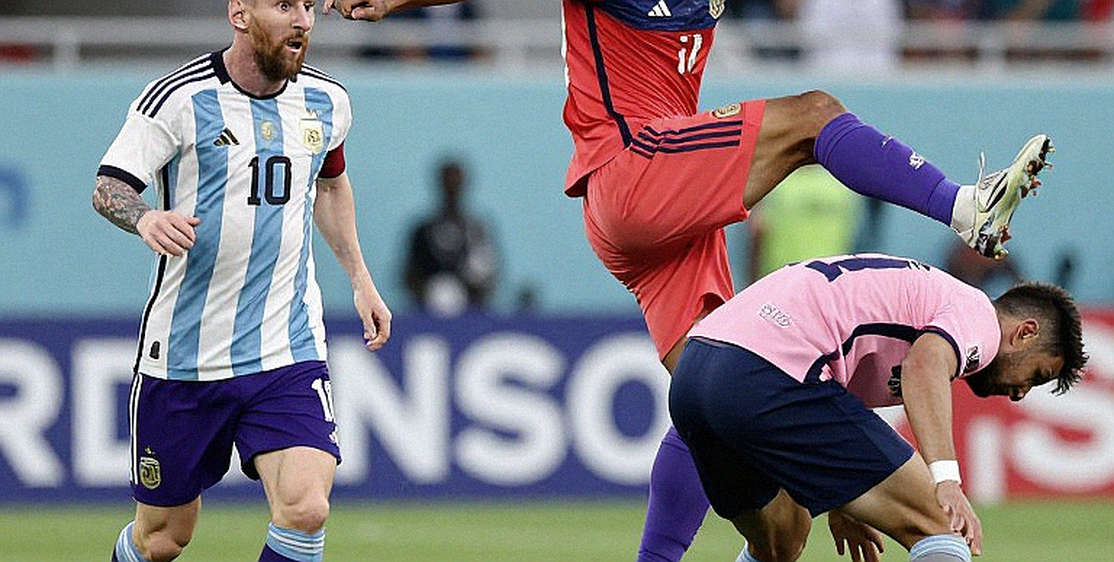
On Nottingham Forest's side, the context is entirely different. Forest are a club in a phase of ambitious construction. They have a billionaire owner, Evangelos Marinakis, who does not hide his ambition to lift the club to a new level. The team has just come through a season of squad change and redirection. In that context, Gibbs-White is not merely a player. He is a symbol. He is both the spiritual captain and the most beloved figure in the stands. Selling a man like that is not a personnel change. It is a cultural event, and every club knows its price.
Technical: two different kinds of creativity
This is where the "successor" story begins to show its problems, and I want to say so plainly.
Bruno Fernandes' technical profile is that of a high-volume No.10. He appears at many points across the pitch, especially in the space in front of the box. His creativity comes from constantly demanding the ball, constantly distributing, constantly shooting from range, and above all from set pieces. Twenty-one assists in a season reflects not only skill but the sheer number of chances he creates. He is a positional, output-driven player. He wins by being everywhere, and the price is that the system must revolve around him.
Morgan Gibbs-White is different. As a former Nottingham Forest striker described him — in content produced in association with the sponsor Unibet — Gibbs-White's strengths lie in carrying the ball forward, in arriving in the box at the right moment, and in goals that come late in the season. That is the profile of a momentum-based creator. He does not generate output by being everywhere like Bruno. He generates moments by accelerating, by bursting into the space the opponent leaves behind.
These two archetypes do not operate on the same principle. One is a metronome; the other is a charge. If United buy Gibbs-White expecting him to replace Bruno on a like-for-like basis, they are buying the wrong function. What the club would gain is not a copy, but a variation. And a variation only has value when the system is redesigned to exploit it.
In the original Goal.com piece, the focus was placed on the idea of a creative slot being inherited directly. Yet there is no xG, xA or PPDA data comparing the two players. No data on how Forest or United press. No description of either side's build-up structure. In other words, the succession question is being sold to the public through a role-similarity argument, not a system-fit argument. These are two different things, and merging them is a common mistake of the transfer press.
If we look at Gibbs-White's profile seriously, we see a 26-year-old at his peak, an England international, a former captain-figure at his club. He moved from Wolves to Forest in 2026. Before and throughout his time at Forest, he has been linked with Tottenham. That means that in an open market, United would not be the only buyer able to appear. Any negotiation would be competitive.
I once sat in a scouting meeting listening to people argue about one player for two hours. What I took from it: big clubs rarely look for a player identical to the one they already have. They look for a player who can upgrade what the system lacks. For United at this moment, what the system lacks is not someone who can do what Bruno does. It is the ability to distribute creative load across multiple points, so the team no longer depends on a single socket.
A momentum-based player like Gibbs-White can contribute to that — if he is placed in a structure that lets him burst through midfield, rather than being boxed into a build-up role. Conversely, if he is forced to stand as a No.10 and distribute at Bruno's volume, he will lose his best quality. This is the line between using a player and destroying one.
The person: name and identity
There is one more thing I want to say, and it likely appears in no analytical table.
In 2026, at the World Cup in Russia, I mispronounced a player's name three times in a single half. The community reacted fiercely; there were more than two hundred critical comments. I collapsed. But afterwards I rewatched the footage of twenty-two matches and practised the pronunciation of players from thirty-two national teams. That crisis taught me one thing: I once misread a man's name, and realised I had accidentally erased his identity.
I thought of that when I read the news about Gibbs-White. He was overlooked for England duty at the World Cup. A former Forest striker publicly said he was unlucky to miss the squad. For a 26-year-old at his peak, who has worn the armband at his club, being overlooked for a major tournament is no small wound. And such wounds often become the motivation to seek a bigger platform.
This is what the press usually ignores when it focuses only on the transfer fee. People talk about fees, contracts, squad value. But behind it all is a human being asking whether he is truly seen. A player overlooked by his national team, while his club quietly harbours ambition, will tend to seek a platform with greater exposure. Not for money. For recognition.
And then there is this detail, small but important: Gibbs-White was a Manchester United supporter as a boy. That is not in a contract. It is in the man. It is a soft lever, impossible to write into a clause, yet every club knows it exists. In personal negotiations, a story like that carries more weight than many figures. A player does not grow through tactics, but through dressing-room walls that know how to keep a secret.
The counter-intuitive angle: the trap of a nickname
Now comes the part I most want to say plainly, and it may not please those excited by the transfer story.
The phrase "the next Bruno Fernandes" is a media product. It is not a technical judgement. It was born from the needs of a content industry in which every big club must have an open transfer story and every talented young player must have a nickname to sell. When the analysis itself is produced on a channel with a commercial sponsorship element, we must be even more careful. Not because the content is wrong, but because it exists to generate engagement, and engagement content tends to overstate the concreteness of a deal.
There are three things the press is not telling you.
First, Forest are not a club forced to sell. They have a billionaire owner with ambition, and they are building a team around figures like Gibbs-White. In such a negotiation, the leverage sits with the seller, unless a release clause or a formal transfer request exists — and no information suggests either is happening.
Second, this is a buyer-initiated deal. United are active; Forest hold. That distinction matters. A buyer-initiated deal with no seller pressure tends to drag on, and often does not close in the first transfer window.
Third, the succession story and the Fernandes renewal are two separate capital-allocation decisions. United wanting to keep Bruno while preparing his replacement creates short-term role ambiguity — and that ambiguity hands negotiating leverage to the player's side. Managed well, it is a phased handover. Managed badly, it is a quiet war inside the dressing room.
I once watched a club sign a player whom the press crowned as an heir; within half a season, that very praise became an unbearable burden. Sometimes the name the press gives a player is the worst thing that can happen to him. It builds a mould in which he will be left to drown.
If Gibbs-White — assuming the deal happens — is placed in the "next Bruno" mould, he will be judged by the assist numbers of a different player, in a different system, in a different role. And when he fails to reach that number, public opinion will call him a disappointment. That is a trap marked out in advance.
Before every piece I write, I ask myself: am I writing this to clarify the truth, or to fall in step with a crowd that is excited? That question has saved me from many mistakes over thirty-three years in the trade.
What is actually worth watching
So, amid all this noise, what is the real internal signal?
It is not the headline "the next Bruno Fernandes". The real internal signal lies elsewhere: how United allocate creative duties if Bruno renews, and how they restructure the system if he leaves. That is the question on which the fate of any deal — for Gibbs-White or anyone else — depends.
For Nottingham Forest, the signal to watch is not a transfer report but the reaction of the stands. If Gibbs-White is sold, the question is not how much money comes in. The question is whether the club keeps its soul. And for a 26-year-old overlooked by his national team, the final question is not where he goes. It is who he wants to become.
I have sat behind at the City Ground on a night like that. The stadium was empty, yet there were hearts still beating in the same rhythm. I keep time for the club, but they are the ones who taught me that the rhythm never stops. And if one day Morgan Gibbs-White wears another club's shirt, I will not look at the number on the scoreboard. I will look at whether his name is pronounced correctly — and whether the one speaking it understands that behind that name is an entire human being.